

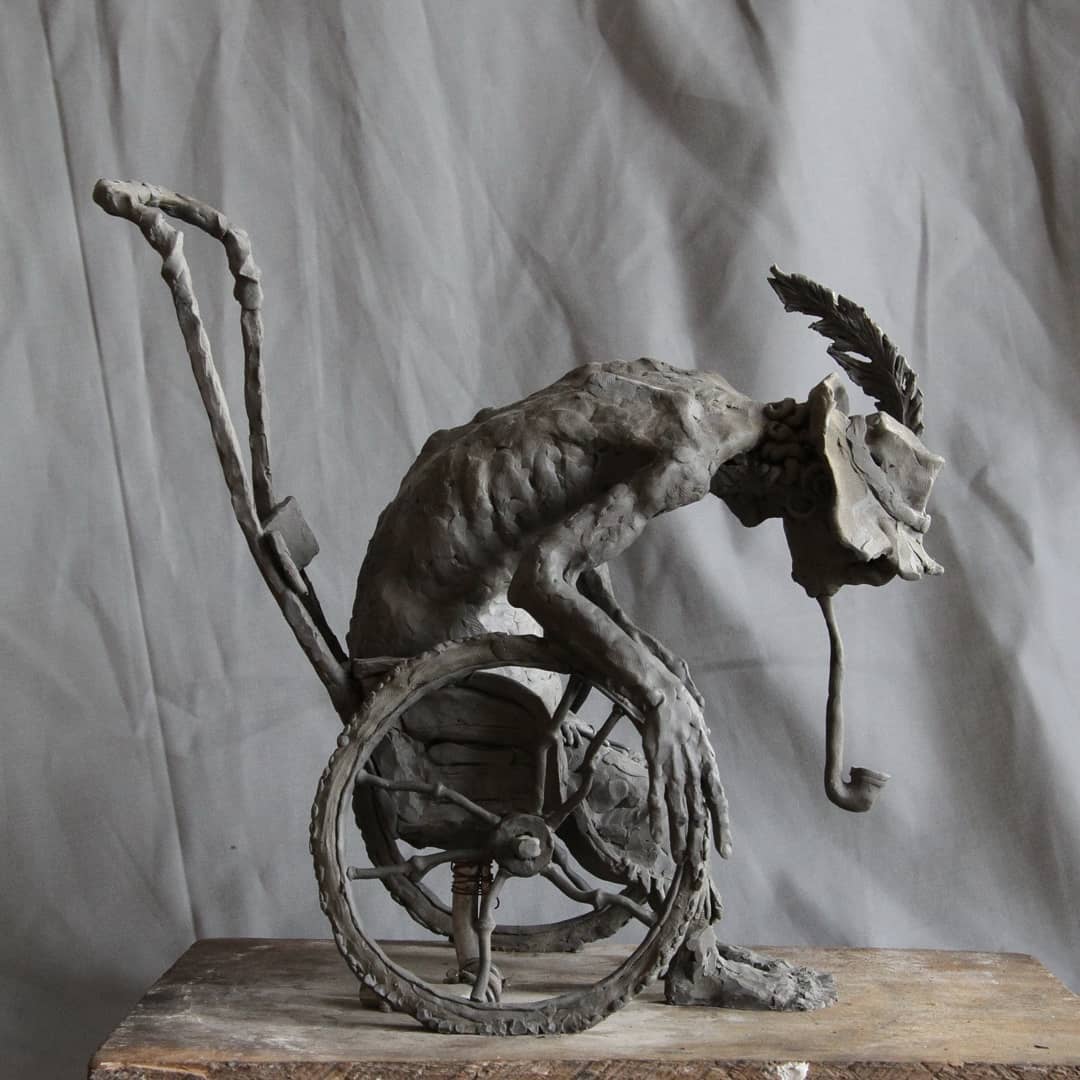
When the mold is ready, it's time for wax, an amazing material that lies between life and death.
It is warm, pliable, responsive to temperature and touch.
Wax is like a temporary shell in which a sculpture wakes up after sleep.
It still has the flexibility of plasticine, but the brittle fragility of metal is already present.
I pour the wax in thin layers, achieving an exact repetition of all the details.
Every millimeter of the surface is checked, every edge is refined.
You can't rush here — moving too fast will leave a mark that will then become eternal.
Wax keeps the truth about every touch.
Sometimes at this stage I slightly adjust the shape — I remove unnecessary things, emphasize the lines.
This is the last chance to say something to the sculpture before it takes on bronze flesh.
I perceive this moment as breathing before jumping — short, focused, filled with expectation.
When the wax is ready, it turns into a casting model.
It will be covered with a ceramic shell, and when heated, it will leave, leaving room for molten metal.
This is how the alchemy of fire begins — the transformation into bronze.
Wax is the moment when the form is still alive, but already knows that it will become eternal.


article
>>